
In today’s tech-driven world, Google stands out for its cutting-edge innovations and continual upgrades. However, a recent update from Google has really surprised everyone, getting a lot of people talking. In this blog, we’ll look closely at this news and see what effects it’s having. Let’s dive in and uncover why this update is causing such a stir in the world of technology.
Google’s Gemini AI: Artistic portraits
Google’s Gemini, formerly known as Bard, is an AI tool introduced in February that employs advanced algorithms, particularly generative adversarial networks, to create realistic portraits of individuals from text descriptions. However, its recent rollout of a text-to-image generative feature has faced criticism due to the bizarre and inaccurate results it has produced.
Why Google Paused Operation Due to Criticism
Critics have highlighted cases where Gemini’s creations portrayed various racial groups, the German army, and even controversial scenarios, like women as Catholic popes or non-white individuals as founding fathers of the US. These inaccuracies have sparked concerns about historical accuracy, with some labelling it as “too woke,” leading Google to temporarily halt its operations.
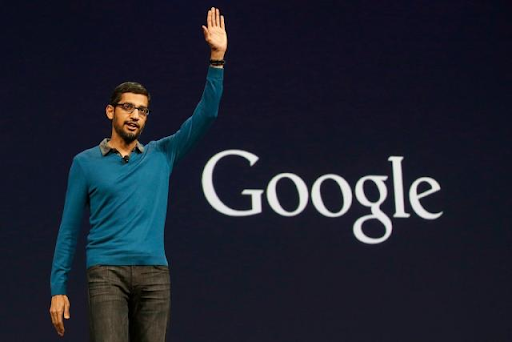
Responding to the criticism, Google’s CEO Sundar Pichai acknowledged the issues and reiterated the company’s commitment to enhancing the accuracy of Gemini’s depictions, especially in historical contexts. “I know that some of our responses have offended our users and exhibited bias – to be clear, that’s completely unacceptable, and we got it wrong,” he added. Pichai further stated, “Our teams have been working tirelessly to address these issues. We’re already observing significant improvements across a wide range of prompts.” This underscores the company’s emphasis on ethical standards in AI development and reassures users of its dedication to rectifying the situation.
Fact: While the concept of reimagining historical figures in modern contexts, such as envisioning Cleopatra as a modern-day actor instead of ruling Egypt’s dynasty, is intriguing, it’s crucial to consider the ethical implications of such portrayals. Achieving a balance between creativity and historical accuracy is essential in the development of AI technologies like Gemini.
Societal and Ethical Impact
The reinforcement of stereotypes and biases through AI-generated images, especially in depictions of historical figures, can significantly influence how society sees certain people or groups. Also, the loss of historical accuracy in AI-generated content poses a big problem for how much people trust this technology. This problem if persists could make people think negatively about AI-generated content and question whether it’s reliable. However, Google’s response to these challenges is notable, showing a commitment to improving accuracy and addressing ethical concerns.
These challenges show how important it is to think about cultural sensitivity, ethics, and getting things right in AI development. It’s also important to actively work on and reduce biases in AI systems to make sure they have a positive impact on society. By including different perspectives, being fair to everyone, and making sure historical facts are accurate in AI-generated content, we can make better and more fair technologies.
Wrapping up
Google paused its operations briefly to address ethical concerns and announced plans to fix inaccuracies and biasness. Despite being launched in February, the tool received criticism over creating inaccurate images. Nevertheless, Google’s commitment to improving these portraits shows its dedication to ethical AI development. An updated version of the feature is set to be released soon.
For the most up-to-date tech news, cutting-edge advancements, and insightful articles, visit Boztech today and embark on a journey of learning and discovery with us.
Add a Comment